


Medical device reimbursement
Bring commercial rates into device adoption reviews.
Compare Medicare with payer-published commercial rates for the procedure, facility, and setting under review. Bring the rate and its source into the hospital's financial discussion.
Payer-published in-network rates, with sources and dates for review.
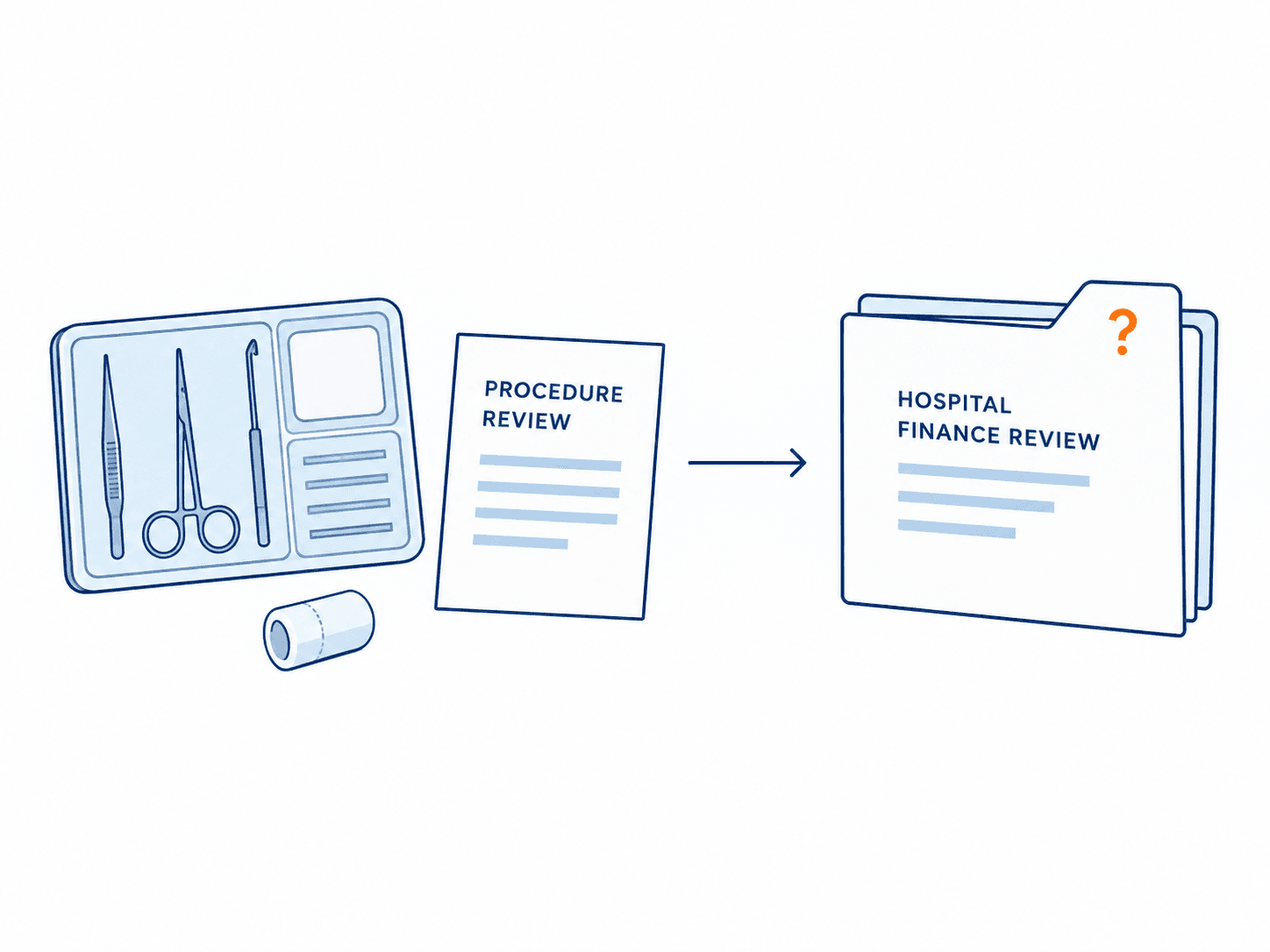
A Medicare-only review leaves out the commercial picture.
A clinical team may want to use a device while hospital finance still needs to understand the procedure's economics.
Medicare is a useful reference point. It does not show the payer-published commercial rates that may be relevant to the hospital's review.
Case study · 2-minute read
See what changed when the review went beyond Medicare.
A hospital was evaluating a nerve repair procedure using Medicare as its reference point. See how a medical device team added a payer-published commercial rate and what hospital finance checked next.
Two-page PDF. Download starts after you enter your details.
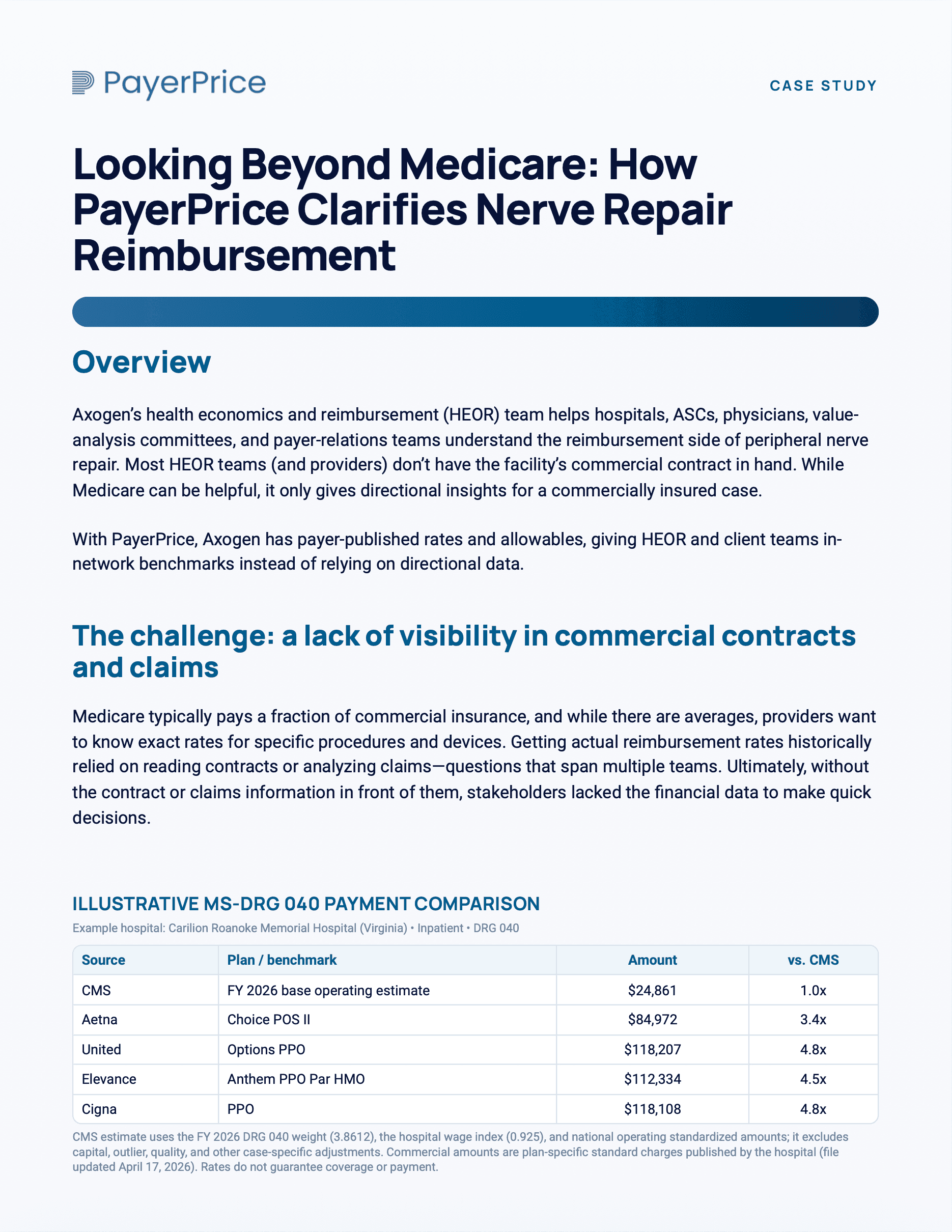
Build the reimbursement picture
A fuller view changed the financial review.

Medicare raised the initial concern.
In one nerve repair review, a hospital's value analysis committee saw Medicare reimbursement as a barrier. Its break-even analysis did not include a commercial rate for the procedure.

A payer-published amount does not guarantee coverage or claim payment.
Commercial data changed the comparison.
PayerPrice surfaced a payer-published rate for a leading local plan at roughly five times the Medicare reference: about $55,000 versus $11,000. The team could bring a specific plan, procedure, and rate source into the discussion.

The hospital checked its own economics.
The committee considered the commercial rate alongside the hospital's payer mix and expected payment. It found those financial assumptions adequate for its review; clinical and adoption decisions remained with the hospital.
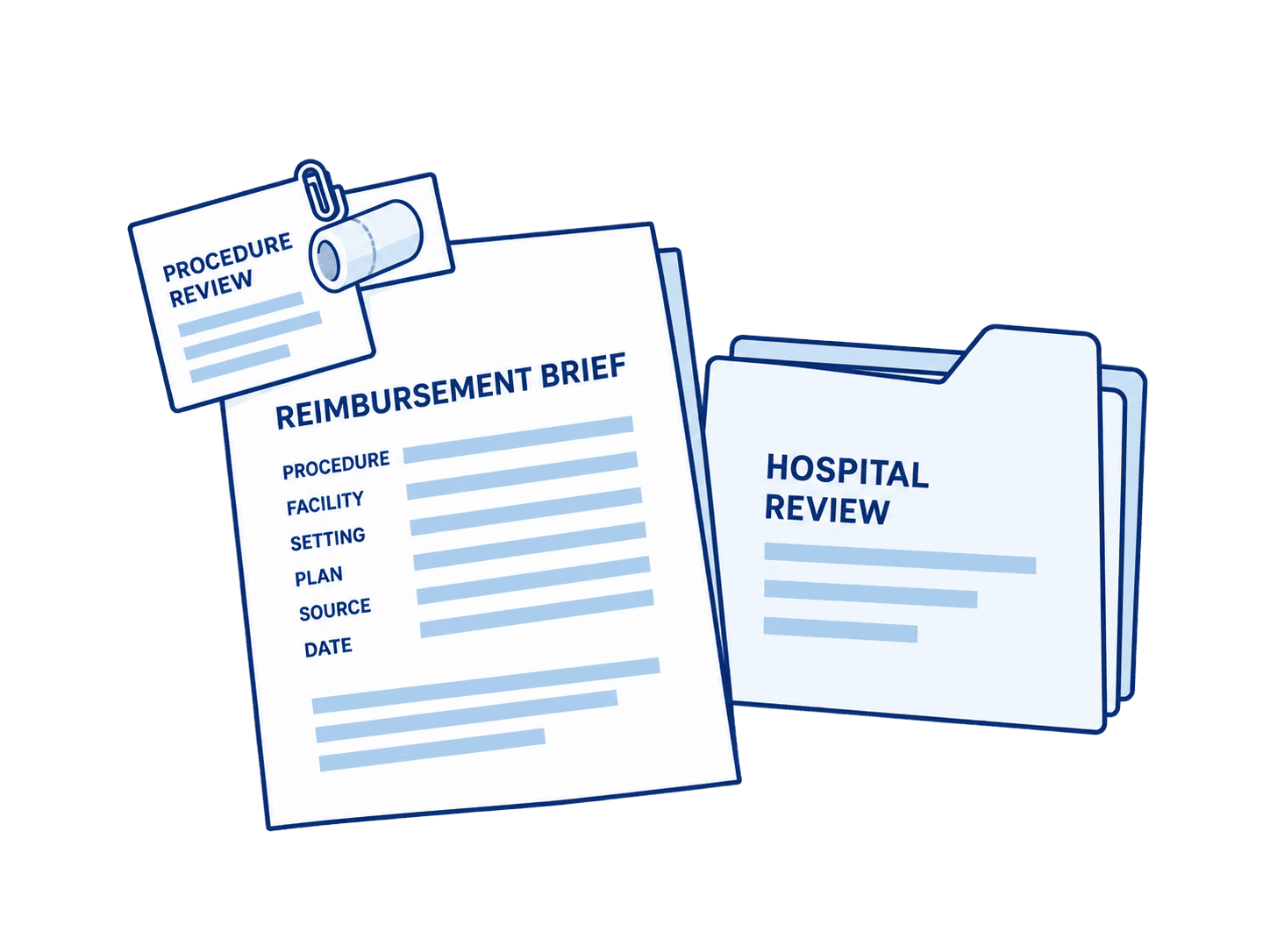
Prepare for the financial discussion
Give hospital finance a rate it can check.
Bring a short summary of the procedure, facility, setting, payer, plan, published rate, source, and date. Hospital finance can compare it with its own contracts and expected patient mix.
Your team brings the evidence. The hospital evaluates reimbursement alongside its clinical and purchasing criteria.
Schedule a reimbursement walkthroughTrace each rate back to the question it answers.
Keep the comparison specific enough for a hospital team to inspect and challenge.
Read the rate FAQs →Match the service and setting
Check the billing code, site of care, and rate type before comparing figures.
Check the provider and plan
Review which provider or facility and which commercial plan the published rate represents.
Keep the source and date
Preserve the payer publication and period so the hospital can verify the rate against current information.
Check what published rates can and cannot tell you.
Use payer publications as evidence for a conversation, then confirm the hospital's own reimbursement position.
Schedule a reimbursement walkthrough →Is a payer-published rate the hospital's contracted rate?
Not necessarily. It is a rate reported in a payer's transparency file for a specific provider, service, and plan. The hospital should check its executed agreement and how that service is billed.
Does a published rate tell us what a claim will pay?
No. Actual payment can depend on contract terms, coding, coverage, claim details, and other adjustments. Use the published rate as context, not a payment forecast.
Does the comparison show whether the device is covered?
No. Coverage policies and medical necessity rules are separate from published rates. Confirm them with the payer and hospital team.
Why compare commercial rates with Medicare?
Medicare offers a familiar reference point. Payer-published commercial rates can add context for the plans and setting under review, where those rates are available.
How should we use this in a value analysis review?
Share the relevant rate, its source, and the assumptions behind the comparison. Ask hospital finance to assess it against its contracts, patient mix, and other adoption criteria.
Does PayerPrice decide whether a hospital should adopt a device?
No. PayerPrice provides published rate evidence for review. The hospital makes its own clinical, financial, and purchasing decisions.
Walk through one procedure with our team.
Bring the code, facility, and plans you want to review. We'll show the available published rates and where they came from.